
Upper body pain or tightness that keeps coming back?
A tight, burning, or achy feeling between your shoulder blades?
Stiffness after desk work or driving?
A “stuck” mid-back when you breathe deeply, twist, or reach overhead?
Neck and shoulder tension that seems connected?
Pain & tension keeps returning even after massage or stretching?
Sternum or rib pain that feels linked to posture, breathing, or upper back stiffness?
Pain when you take a deep breath, cough, roll in bed, or reach overhead?
A “rib feels stuck” or “front of chest feels tight” sensation?
**Ongoing or recurring upper back problems often aren't just from one spot - they can be linked to how your whole body is working together.

Do you have a diagnosis?
You might have been told it is:
Muscle strain
Kyphosis
Arthritis
Costochondritis / chest wall pain (cleared medically)
A disc issue
"Just posture"
Fibromyalgia or polymyalgia
Pectus excavatum / carinatum (ribcage shape and mechanics)
Scoliosis
But even when you know what it’s called, you still don’t know what caused it — or how to change it.
Sometimes the main discomfort is at the front of the chest (sternum or ribs),
but the pattern involves the ribcage and upper back working harder than they should.

Common contributors we assess include:
Ribcage stiffness (front/back ribs not moving well)
Breathing mechanics and chest wall loading
Upper back and shoulder girdle tension
Whole-body alignment patterns that keep the area irritated
Common causes of upper back problems
Unresolved Injuries
Past injuries that were not fully rehabilitated (or are getting worse), leaving your body to adapt and move around them.
Physical Work Stress
Recurring wear and tear from physically demanding work. It may also reinforce compensation patterns.
Every Day Habits
Prolonged sitting, screen time or other activities can gradually pull your head and shoulders forward.
Compensation Patterns
When one area isn’t moving or loading well, your body adapts — and the upper back often takes the strain
A posture process that leads to
ongoing upper back problems
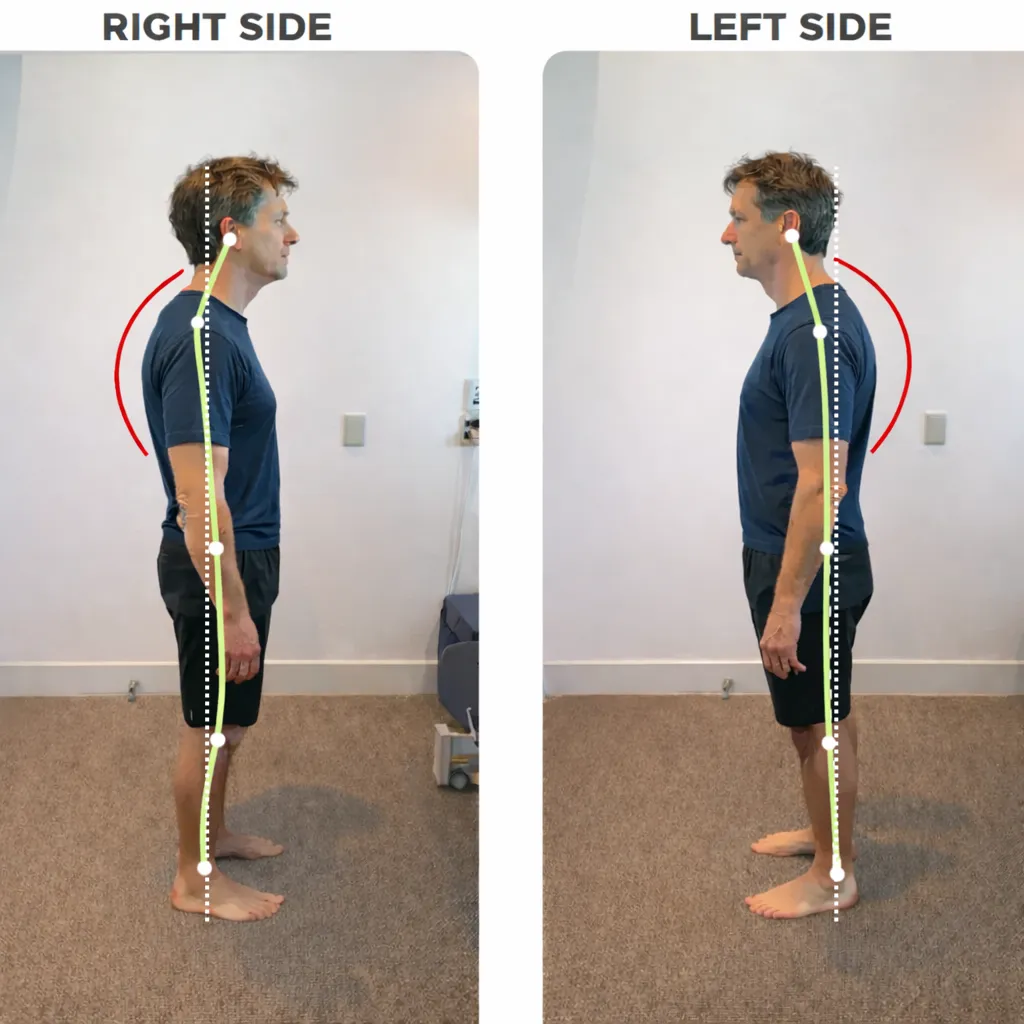

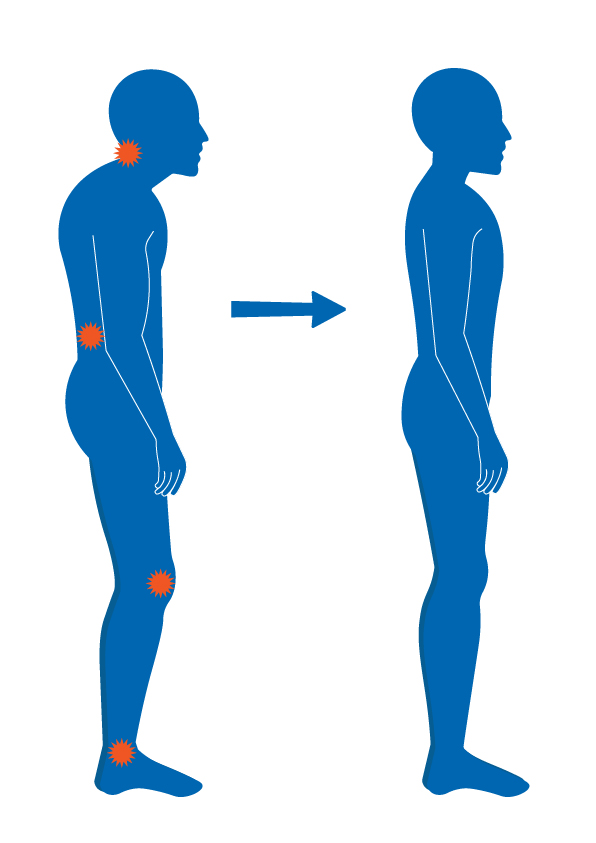
It’s not just the sore spot
Your spine is designed to share movement between your neck, upper back, and lower back. When that balance is off, your upper back can end up doing more than its share.

Compensation
If your neck or lower back aren’t moving well (stiffness, weakness, irritation), your body often “borrows” motion elsewhere to keep you functioning.

Leaning forward & increased effort
A common compensation is your upper back rounding more, which can shift your ribcage forward. Your head and shoulders follow, and a forward head posture increases the work needed to hold you upright.

Ongoing tightness &
“it feels like my shoulder/neck”
Muscles meant for movement (rotation/extension/side-bending) can become overactive just to keep you functioning.
That can feel like tight shoulders, neck stiffness, headaches, or recurring shoulder/rotator cuff–type irritation. It often continues until the underlying alignment and movement pattern improves.
Why am I not recovering?
The Problem with most Treatments
Thousands of wonderful practitioners in these fields provide people with incredible service. There is a time and place for these services.
The problems presented here relate to helping to improve your physical function to a high level so that you can enjoy life fully - without pain & limitation.

Medications / Opioids
There are many options available and they may or may not work (if you find the right one) to help settle your symptoms short-term. Meds can also come with downsides like upset stomach etc and dependence.
Long-term you can be more vulnerable & prone to pain & aggravation as the meds don't change the underlying alignment or loading pattern that keeps your upper back irritated.

Cortisone Injections
Injections can reduce inflammation and pain in a local area (short term), but they do not correct the movement or posture drivers that may be feeding the problem. You can only have a limited number of cortisone injections in one joint/area.

Surgery
Surgery is not commonly offered for most upper back problems.
It is usually reserved for specific structural problems or red-flag situations, rather than the common “tight, stiff, recurring” upper back presentation.

Massage
Massage can feel great and may reduce tension and pain in the short term, but on its own it often does not create lasting change if the same posture and compensation patterns keep returning.

Chiropractic
Many people get temporary relief from having their upper back “cracked” or mobilised, especially when it feels stiff and pressured. Many people find they need repeated visits because the underlying movement pattern hasn’t changed.
We find the opposite tends to work better long-term: gentle functional movement training that restores alignment, improves how the body shares load, and helps your upper back stop compensating.

Physio (traditional)
Hands on treatment (manual therapy) & exercise (often athletic type strengthening/gym) can be a key part of long-term improvement.
But if the focus is only on the painful area, results can stall.
Lots of people tell themselves “no pain no gain”. Unfortunately pushing through pain can reinforce the same compensation pattern rather than fix it.
What Whole-Body Alignment Therapy focuses on
Restoring balanced posture
Improving how your spine shares load
Reducing unnecessary compensation
Giving you exercises matched to your alignment
Helping you maintain improvement long-term
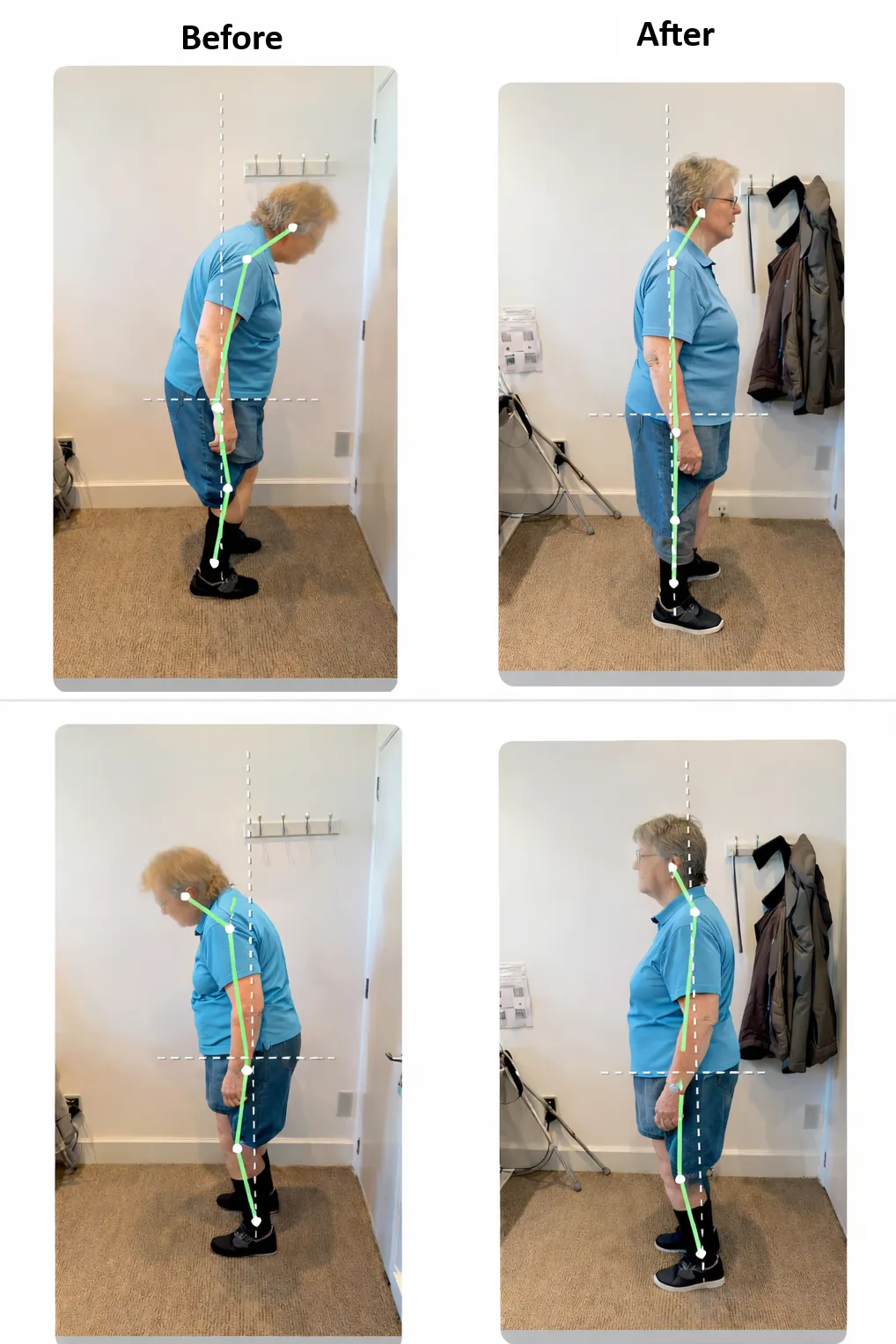
This is an image of a clients before-after pictures from whole-body alignment therapy (with their permission).
Their hair/facial features only were edited by AI for privacy reasons.
What people say after starting alignment work:
When should I see a whole-body alignment therapist for upper back pain or tightness?
- When you’ve tried rest, but your pain or tightness is not settling, or it keeps coming back.
- When it’s triggered by screen time, desk work, stress, training load, or daily habits.
- When you also notice neck or shoulder tension, headaches, stiffness, or restricted turning/reaching.
- When short-term fixes help briefly, then it comes back.
- When you have had success with this in the past and you have a new problem or injury and want the best solution.
- Unsure if this is right for you? Get in touch, we can help.
Safety note: If you’ve had a significant accident, fever, unexplained weight loss, chest symptoms, or new/worsening numbness or weakness, seek urgent medical advice first.
Can you help if my pain is in my chest, sternum, or ribs?
If your symptoms have been medically cleared, we can assess how your upper back, ribcage, breathing mechanics, posture and whole-body alignment may be contributing, then create a plan to improve your movement and loading.
How often do you recommend that I do whole body alignment exercises?
It is best to do a menu of exercises most days that you can (we understand that life can get busy, do the best you can). We can provide shorter versions in case you have more time limitations.
We’ll tailor the frequency to where you are at now and for your symptoms. And we will adjust based on how your body responds. The goal is consistency you can maintain, not overdoing it and becoming worse.
What happens in a whole-body alignment session?
- We chat about what’s happening and what you want to get back to.
- A whole-body assessment to see how you’re aligned and sharing load. This may include whole-body alignment photos and a gait assessment.
- We'll discuss your findings and then we will take action, guiding you through positioning and movement, if appropriate.
- You leave with a plan which may include a printout and access to videos/exercise instructions) you can do at home to support change between visits.
How many sessions will I need (and how will I know it’s working)?
You may start to feel improvements after just your first routine, with significant results often appearing within a few weeks. Most people start with 2-5 sessions, then we review.
For optimal, lasting results, the recommended course of action is:
- Initial Course: 8 to 15 sessions (over two to six months) are generally recommended to establish, maintain, and correct posture.
Key Takeaways on Whole-body Alignment Consultation Frequency:
- Immediate Improvement: 85% of users report feeling better after their very first routine.
- Reduced Pain Medication: 75% of users stop taking pain medication within a few weeks.
- Daily Routine: While you may have guided sessions, the program focuses on daily, self-administered, AI-generated, custom routines to address pain.
- Long-Term Results: Consistent, long-term adherence (2-6 months) is recommended for permanent postural correction.
We tailor your programme - it is designed for rapid, self-driven results, usually taking less time than traditional physiotherapy.
For more complex/chronic problems, working with us over a longer period of time will help to deal with the underlying cause of your problem(s) more effectively.
I feel like I am standing straighter already
In-clinic & Online Consultations
DIY Home Exercises Available